What to know about access delays for Hatton gardeners
If you have ever booked garden work only to realise the side gate is wedged shut, the driveway is stacked with bins, or the only route to the back garden runs through a narrow passage with a wheelbarrow and no room to turn, you already understand the heart of access delays. What to know about access delays for Hatton gardeners is not just a scheduling issue; it affects how safely, quickly, and neatly the job can be done. A small access snag can slow everything down, especially on a wet morning when tools are heavy and the ground is slippery.
This guide explains why delays happen, how they affect different garden services, and what you can do before the team arrives. It also covers the practical side: expectations, common mistakes, and the small checks that save everyone time. Truth be told, a few minutes of preparation can spare you a lot of back-and-forth later.
Expert summary: Most access delays are avoidable. Clear routes, honest job notes, and a quick pre-visit check usually make the biggest difference, especially for larger tasks like hedge work, clearance, or tree jobs.
Table of Contents
- Why access delays matter
- How access delays work in practice
- Key benefits of planning ahead
- Who this is for
- Step-by-step guidance
- Expert tips for smoother visits
- Common mistakes to avoid
- Tools, resources and recommendations
- Law, compliance, standards and best practice
- Options and comparison
- Real-world example
- Practical checklist
- Conclusion
- Frequently asked questions
Why access delays matter
Access delays might sound minor, but in gardening they can influence almost every part of the visit. If the team cannot reach the work area with tools, waste bags, mowers, ladders, or cutting equipment, the job often takes longer than planned. That can affect labour time, the order of tasks, and sometimes even what can be completed on the day.
For Hatton gardeners, access matters because many jobs depend on efficient movement between the street, front path, side return, and rear garden. A narrow alley, locked gate, steep steps, or a cluttered courtyard can all create bottlenecks. And if the task involves bulky waste, such as after garden clearance, the problem gets bigger quite fast.
There is also the safety angle. Garden work often involves sharp tools, powered kit, heavy materials, and uneven surfaces. If access is awkward, the risk of trips, strained lifting, or accidental damage rises. That is why a good gardening team will ask questions about access before arrival, and why you should answer them carefully rather than vaguely saying, "It should be fine." We have all said that once. It rarely helps.
How access delays work in practice
Access delays usually start before anyone steps through the gate. A customer may think the job is straightforward, but the contractor discovers a few surprises on arrival: a padlocked side entry, a dog that needs securing, a shared alley blocked by bins, or a lawn that can only be reached by carrying tools through the house. Those little details shape the whole day.
In practical terms, access affects:
- Arrival and setup time - unloading tools takes longer if parking is distant or the route is awkward.
- Task sequencing - a job may need to be done in a different order to avoid repeated trips.
- Waste removal - cuttings, clippings, and debris can take longer to carry out.
- Equipment choice - larger machines may not fit through some routes, so smaller equipment may be needed.
- Completion time - a job that should take one visit may need to be split into stages.
This is especially relevant for services like lawn mowing, hedge trimming, and tree surgery, where equipment size, access to the work area, and safe movement all matter. A mower can look simple enough until it has to be carried through a kitchen-sized side passage. Not ideal.
Good communication reduces the problem. If the gardener knows in advance that a gate sticks, a lock code is needed, or the only access is through a neighbour's shared path, they can plan for it. No drama, just fewer delays.
Key benefits of planning ahead
Planning for access is not just about avoiding awkwardness. It creates real advantages for both the homeowner and the gardener.
- Better time keeping - the team can start faster and keep the work moving.
- Cleaner results - less rushing means less mess left behind.
- Safer working conditions - clear routes reduce the chance of accidents.
- More accurate quotes - the gardener can estimate labour and equipment needs more reliably.
- Less disruption - especially useful if you are at home working, caring for children, or sharing access with neighbours.
There is also a customer service benefit that people sometimes overlook. If access is clearly explained, the visit feels more organised and calm. The gardener is not guessing, and you are not being asked repetitive questions at the door while everyone is trying to get on with the day. Small thing, but it matters.
If you are comparing broader service options, it can help to review gardening services alongside specific tasks like maintenance, clearance, or landscaping. Access issues can differ depending on the scale of the work, and the right service choice can make a difficult site much easier to manage.
Who this is for and when it makes sense
This topic is relevant to almost anyone arranging outdoor work, but it is especially useful if your property has one or more of the following:
- limited side access or no side access at all
- a rear garden only reachable through the house
- shared pathways or narrow alleyways
- locked gates, coded entry, or tenant-managed access
- heavy growth, debris, or overhanging trees
- older fencing, uneven paving, or steps that slow movement
It also matters more when the work is larger or more time-sensitive. For example, if you have booked garden maintenance after a long period of neglect, the first visit may need more carrying, clearing, and repositioning of materials than a routine tidy-up. Likewise, jobs involving landscaping or landscape gardening may require repeated access with soil, sleepers, paving materials, or plant stock.
To be fair, even a very neat garden can be awkward to reach. Clean does not always mean easy. A polished patio at the back of the property is still inconvenient if the only route is through a cramped entrance and past two bike sheds and a very suspicious cat.
Step-by-step guidance
If you want to reduce access delays before a gardener arrives, this is the simplest way to do it.
1. Walk the route the team will actually use
Stand at the front of the property and follow the route from the street to the working area. Look for narrow points, steps, loose paving, locked doors, overgrown edges, and anything that would slow someone down while carrying tools.
2. Measure the awkward bits
You do not need a surveyor's kit. Just note whether a mower, ladder, or wheelbarrow can fit through comfortably. If you have a gate that opens only partially, mention that. If there is a fixed obstacle, say so plainly.
3. Flag parking and unloading issues
If parking is restricted or the nearest stopping point is far from the house, the team may need extra time. That is especially relevant for larger visits or when the job involves bulky waste collection.
4. Secure pets and clear the route
Dogs in the garden, toys on the lawn, plant pots in the pathway, recycling boxes, garden furniture, and hosepipes are all common hold-ups. Move what you can before the appointment. It sounds obvious, but on a busy morning obvious things get forgotten.
5. Share access notes when booking
When arranging work, mention the practical details: gate codes, which entrance to use, whether someone must be present, and whether there are any restrictions around neighbours or shared spaces.
6. Choose the right service for the access conditions
If the garden is difficult to reach and heavily overgrown, a first visit may need a more intensive service rather than a routine tidy. In some cases, garden clearance is the better starting point before maintenance can begin properly.
7. Confirm the plan before the day
A short confirmation message or call can prevent a lot of confusion. It is a simple habit, but it works. Ask whether the team needs anything from you before arrival.
Expert tips for better results
In our experience, the smoothest visits are usually the ones where the practical stuff has been handled early. Nothing fancy, just decent preparation.
- Leave the route wider than you think you need. A route that "just about fits" is usually slower in real life than it looked the night before.
- Use clear labels for gates or bins. If there are multiple entrances, simple notes help.
- Be honest about obstacles. People sometimes downplay the problem because they do not want to sound difficult. Better to be clear than polite in the wrong place.
- Separate access from task urgency. A quick mow is not the same as a full clearance job. Different delays, different planning.
- Ask about equipment early. If a larger machine will not fit, the gardener may need to bring alternatives.
A useful habit is to think in terms of movement, not just appearance. A garden can look tidy and still be hard to work in if pathways are cluttered or if materials are stored exactly where someone needs to pass. That is the bit people miss.
And yes, sometimes a gate is simply a stubborn old thing that needs a shoulder and a prayer. Not ideal, but it happens.
Common mistakes to avoid
Access delays often come from the same few mistakes. The good news? Most of them are easy to avoid.
- Assuming access is obvious - what is obvious to you may not be obvious to someone arriving for the first time.
- Forgetting side gates or alley restrictions - one blocked path can change the whole job setup.
- Not mentioning shared access - shared entrances can bring timing, privacy, or neighbour-related issues.
- Leaving clutter in the way - even small items can slow a visit when repeated lifting is involved.
- Waiting until the day of the job to explain the problem - by then the schedule is already in motion.
- Booking the wrong type of work - routine maintenance is not always enough for an overgrown, hard-to-reach garden.
One of the biggest mistakes is underestimating how much carrying matters. A job may look quick from the kitchen window, then turn into a slow back-and-forth because every bag of waste has to be moved through a tight passage. That is where delays stack up.
Tools, resources and recommendations
You do not need special equipment to handle most access issues, but a few simple tools help.
- Measuring tape - useful for checking gate widths or awkward gaps.
- Phone photos - a few clear pictures can help explain the route better than a long description.
- Sticky notes or labels - handy when there are multiple gates, locks, or entry points.
- Basic garden storage boxes - these can keep paths clearer between visits.
- Simple pre-visit checklist - see the checklist section below.
From a service perspective, it can also help to review the related work page before booking. For example, if access is tight but the main issue is overgrown hedging, then hedge trimming may be enough. If the whole space is cramped, a broader approach through garden maintenance might be better value and less disruptive over time.
When a job involves hard surfaces, slippery moss, or debris near entrances, patio cleaning can also be worth considering because clear, even surfaces make access safer. Simple stuff, but it changes the feel of the whole garden.
Law, compliance, standards and best practice
Access delays are not just a convenience issue; they can intersect with safety, insurance, and duty of care. While every job is different, professional gardeners in the UK are generally expected to work in a way that reduces avoidable risk, protects property, and uses suitable equipment for the site conditions.
That means a few best-practice points usually apply:
- Safe access routes should be identified before work begins where possible.
- Manual handling should be sensible, especially with bags of waste, paving materials, and heavy tools.
- Equipment choice should match the site, not just the task.
- Property protection matters, including gates, paving, glazing, and nearby structures.
- Insurance and risk awareness are important when access is awkward or when tools must pass through shared spaces.
If you are comparing providers, it is sensible to check how they think about safety and access rather than assuming every company handles it the same way. A well-run business will usually explain its approach clearly, and the details should sit comfortably alongside pages such as health and safety policy and insurance and safety.
There is also a broader customer confidence angle. Knowing where to find business information, about the team, and practical terms such as terms and conditions helps you understand how access-related changes may be handled. No one loves reading policies on a sunny Saturday, but they do matter when timing gets tight.
Options and comparison
Not every access delay needs the same solution. Here is a simple way to think about the main options.
| Situation | Best approach | Why it helps |
|---|---|---|
| Routine upkeep with clear paths | Standard visit with basic access notes | Fastest and simplest setup |
| Narrow gate or limited side access | Confirm route width and equipment limits before booking | Avoids bringing unsuitable tools |
| Heavily overgrown or cluttered garden | Start with clearance before maintenance | Stops the team fighting the site as well as the growth |
| Large materials or structural work | Plan for landscaping access and loading space | Improves safe movement and delivery handling |
| Hard surfaces, debris, or slippery entries | Include cleaning or surface prep where needed | Makes access safer for the visit and aftercare |
In plain English, the more a job involves carrying, cutting, loading, or repetitive movement, the more access matters. That is why services like lawn care, lawn mowing, and tree lopping and removal need different planning. One size does not fit all. Wouldn't that be convenient?
Case study or real-world example
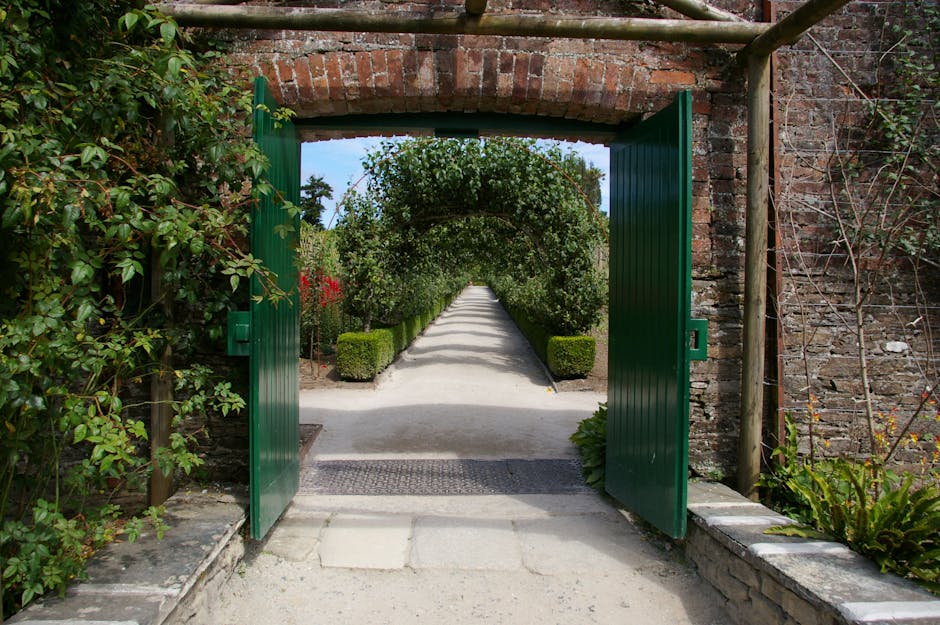
Imagine a typical Hatton home with a long rear garden. The front path is fine, but the side gate only opens halfway because it catches on the frame. The garden itself is manageable, but there are several bags of old clippings, two heavy pots, and a compost bin stored along the route.
On paper, the job is straightforward. In practice, the gardener reaches the gate, spends a few minutes clearing the route, then needs extra trips because the waste cannot be moved in one go. Nothing catastrophic, but the visit stretches out. If the customer had mentioned the sticking gate and the narrow carry route in advance, the team could have planned smaller loads, a different equipment setup, and a more realistic timetable.
Now compare that with a second visit a few weeks later. The route is cleared before arrival, the gate is left unlocked, and the key instructions are confirmed the day before. The same kind of work suddenly feels calm and efficient. Same garden, different outcome. That is the whole point, really.
Sometimes the smallest bit of preparation changes the mood of the whole visit. You hear the gate click open, the tools come through without hassle, and the work starts with less fuss. That matters more than people expect.
Practical checklist
Use this quick checklist before your appointment.
- Confirm the exact entrance the team should use.
- Check that gates, locks, and latches work properly.
- Clear toys, bins, furniture, and loose tools from the route.
- Note any steps, narrow gaps, or slippery surfaces.
- Tell the gardener if parking is restricted nearby.
- Secure pets and let other household members know the visit is happening.
- Share any access codes or special instructions in advance.
- Decide whether the job needs maintenance, clearance, landscaping, or tree work rather than a standard visit.
- Take a couple of photos if the access route is unusual.
- Reconfirm the plan the day before if the property is particularly awkward to reach.
If you can tick most of those off, you are in good shape. Not perfect, perhaps, but very workable.
Get a free quote today and see how much you can save.
Conclusion
What to know about access delays for Hatton gardeners comes down to a simple idea: the garden itself is only part of the job. The route to it, the space around it, and the ease of moving tools and waste all shape how smoothly the work goes. When access is planned properly, the visit is safer, quicker, and far less stressful.
If your garden is easy to reach, brilliant. If it is a bit awkward, that is fine too. Just say so early, clear the route if you can, and choose the right service for the site. A little honesty saves a lot of faff later, and to be fair, that is usually the kindest thing for everyone.
Good garden work should leave you with a better space, not a headache. Get the access right, and everything else has room to breathe.
Frequently Asked Questions
What are access delays in gardening?
Access delays happen when a gardener cannot reach the work area quickly or safely because of gates, narrow paths, locked entrances, clutter, parking problems, or difficult routes through the property.
Why do access delays matter so much?
They affect setup time, safety, labour costs, and what equipment can be used. In some cases, they can also change whether a job can be completed in one visit.
How can I reduce access delays before the visit?
Clear the route, unlock gates, secure pets, share access codes, and mention any awkward spots when booking. A few photos can help too.
Should I mention a narrow gate when requesting a quote?
Yes. It helps the gardener estimate the job properly and decide whether standard equipment will fit or whether a different approach is needed.
Do access problems usually increase the cost?
They can, especially if the job takes longer or needs extra handling. The exact impact depends on the size of the task and the level of difficulty.
Can gardeners still work if the garden is only reachable through the house?
Often yes, but it depends on the layout, the type of work, and whether the route can be used safely without damaging floors or fittings.
What should I do if my side gate sticks?
Tell the gardener in advance and, if possible, fix or free the gate before the visit. If that is not possible, be clear about how it opens and how much space it allows.
Is access more important for larger garden jobs?
Usually, yes. Jobs such as clearance, landscaping, tree work, and heavy maintenance often involve more equipment and more carrying, so access matters more.
Can a difficult access route affect safety?
Yes. Tight routes, uneven paving, clutter, and repeated carrying can increase the chance of slips, trips, or strain. Safer access means safer work.
What if I am not sure whether access will be a problem?
Describe the route honestly and ask the gardener whether they need more detail. If there is any doubt, a short phone call or a few photos can clear things up quickly.
Do access delays mean the job cannot be done?
Not necessarily. Many access issues can be managed with planning, different equipment, or a change in task order. The key is to mention them early.
What is the best next step if I need help with a difficult garden?
Start with a clear description of the access route, the type of work needed, and any obstacles. That gives you the best chance of getting accurate advice and a practical plan.